오버레이 사용하기
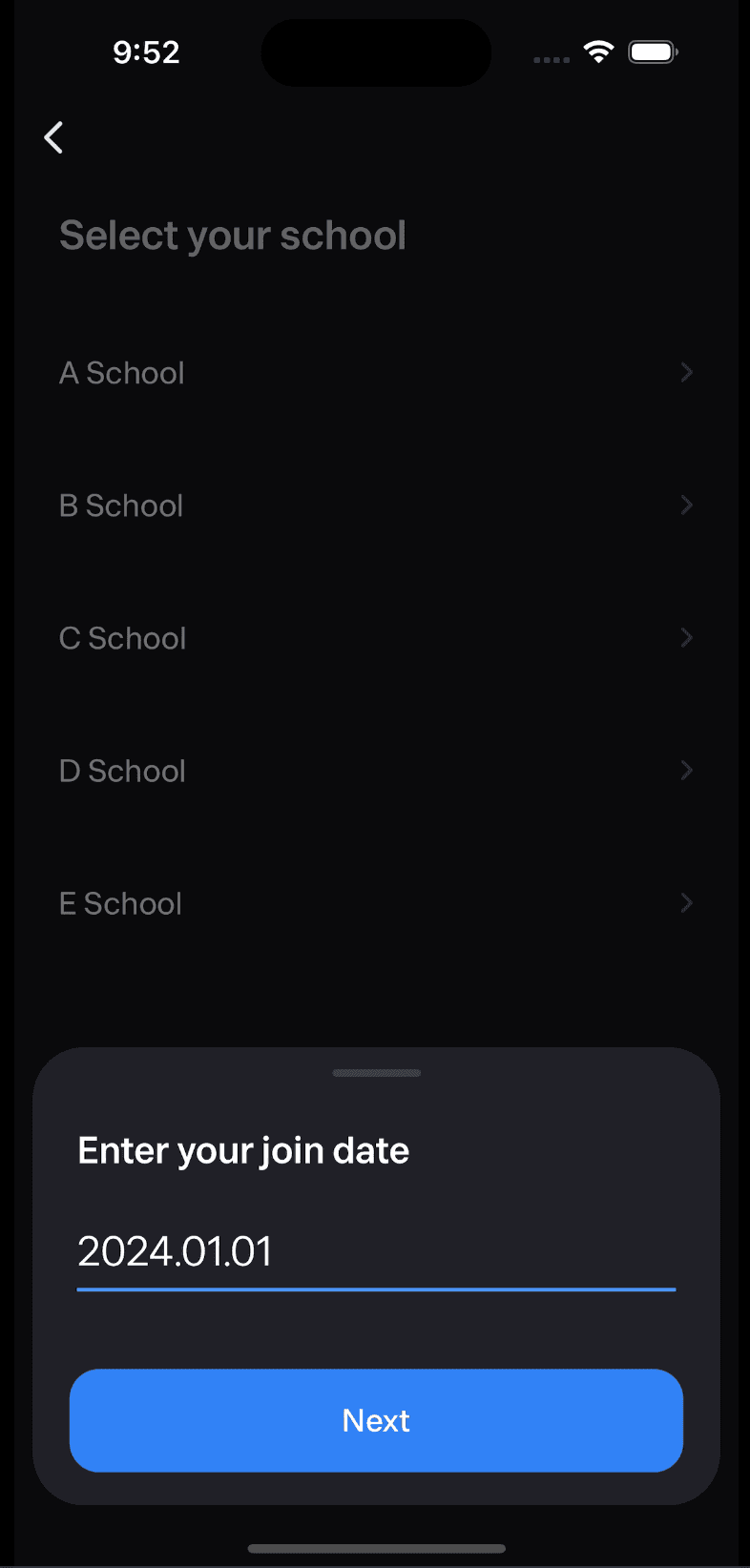
오버레이는 현재 단계에서 이전 단계를 유지한 채 오른쪽 그림처럼 모달, 바텀시트와 같은 UI를 표현할 때 사용해요.
다음 예제에서는 “학교입력” 단계에서 “시작일자입력” 단계로 넘어갈 때 오버레이를 사용해요. <시작일자입력BottomSheet /> 컴포넌트가 렌더링될 때, 이전 단계의 UI인 <학교입력 /> 컴포넌트는 유지된 상태에요.
<funnel.Render
  학교입력={({ history }) => (
    <학교입력
      onNext={(school) => history.push('시작일자입력', { school })}
    />
  )}
  시작일자입력={funnel.Render.overlay({
    render({ history, close }) {
      return (
        <시작일자입력BottomSheet
          onNext={(startDate) => history.push('다음단계', { startDate })}
          onClose={() => close()}
        />
      );
    }
  })}
/>
⚠️
주의할 점: overlay가 라우터의 뒤로가기를 통해 닫힌게 아닌 다른 인터렉션으로 닫힌 경우, 명시적으로 render()의 인자인 close() 를 실행해줘야 해요. close()를 실행하면 히스토리를 통해 이전 단계로 이동해요.
예제
💡
위 예제에서 오버레이를 쉽게 관리하기 위해 overlay-kit을 사용했어요.
오버레이와 이벤트를 함께 사용하는 예시
오버레이와 전환 이벤트를 함께 정의하고 싶다면 events 속성을 사용해 보세요.
다음 예제에서는 “이메일입력” 단계에서 전환 이벤트와 오버레이를 함께 사용해요. “이메일입력완료”와 “이메일입력실패” 이벤트를 정의하고, 각 이벤트에 따라 다음 단계로 전환해요.
<funnel.Render
  이메일입력={funnel.Render.overlay({
    events: {
      이메일입력완료: (email: string, { history }) => history.push('비밀번호입력', { email }),
      이메일입력실패: (error: Error, { history }) => history.push('에러페이지', { error: error.message })
    },
    render({ context, dispatch }) {
      return (
        <이메일입력
          email={context.email}
          onNext={(email) => dispatch('이메일입력완료', email)}
          onError={(error) => dispatch('이메일입력실패', error)}
        />
      )
    }
  })}
/>
⚠️
이벤트를 정의할 때는 렌더링 함수에서 history를 사용할 수 없어요. 대신 events 객체를 사용해 정의한 이벤트를 dispatch()로 호출할 수 있어요.